Designing a flexible workforce management experience for healthcare professionals
Healthcare organizations needed a better way to connect nurses with flexible work opportunities while balancing staffing demands across hospitals. I helped design a workforce management platform that simplified shift discovery, scheduling, and communication for both clinicians and healthcare organizations.
Overview
Role
Lead Product Designer (sole designer)
Duration
Multiple product sprints
Team
Product Owner, Engineering Team
My Responsibilities
User research, product strategy, UX/UI design, prototyping, usability testing, developer collaboration
Outcome
Designed a flexible workforce platform that streamlined how nurses discovered, accepted, and managed shifts across healthcare organizations.
The Problem
Flexibility shouldn't come at the cost of complexity.
Healthcare professionals increasingly wanted more control over when and where they worked, while healthcare organizations struggled to fill staffing gaps efficiently. The existing experience made it difficult for clinicians to find relevant shifts, understand requirements, and confidently manage their schedules. The challenge wasn't simply displaying available jobs.
It was helping users quickly answer three questions:
- Am I qualified?
- Does this fit my schedule?
- Can I trust what I'm signing up for?
Those questions shaped every design decision that followed.
Understanding Users
Because this was a new product, I began with user research to understand how nurses evaluated opportunities and managed flexible schedules. I interviewed healthcare professionals and synthesized the findings into a set of recurring behaviors rather than isolated feature requests.
Three themes consistently emerged.
Nurses wanted flexibility without uncertainty.
Users wanted greater control over their schedules but needed confidence that each opportunity included enough information to make an informed decision.
Context mattered as much as availability.
Shift time alone wasn't enough. Users also evaluated location, specialty, pay, facility expectations, and scheduling conflicts before deciding whether to accept an assignment.
Managing work shouldn't require multiple tools.
Participants described switching between staffing agencies, calendars, emails, and text messages to coordinate their schedules. There was an opportunity to consolidate those workflows into a single experience.
My Role
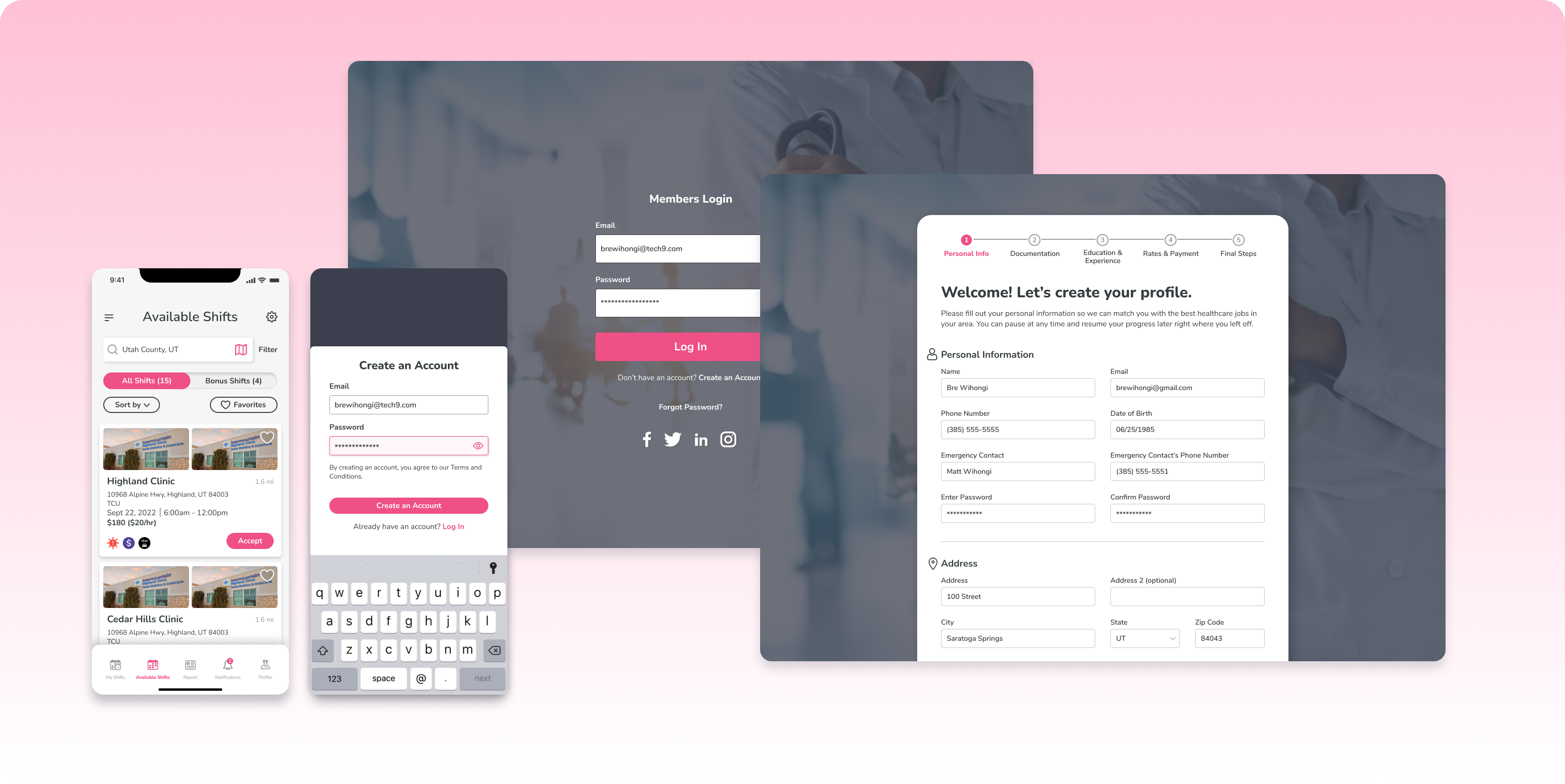
As the sole Product Designer, I led the experience from discovery through delivery. I conducted user research, synthesized insights, defined product workflows, designed the mobile experience, created interactive prototypes, and partnered closely with Product and Engineering throughout development.
Rather than optimizing individual screens, I focused on creating an experience that reduced uncertainty at every stage of the scheduling journey.
Key Decision #1
Surface the information users needed to decide quickly
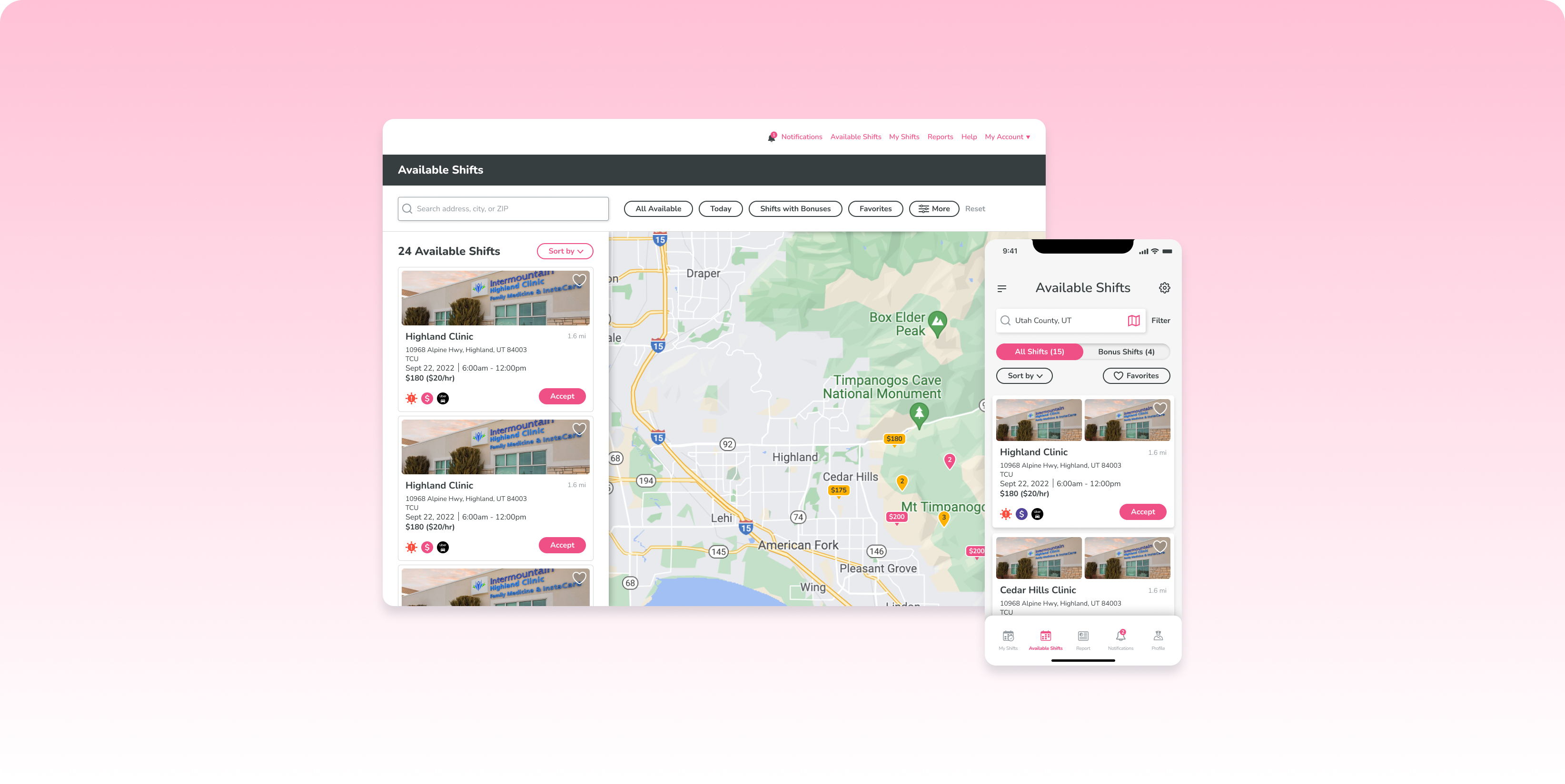
Accepting a shift is a commitment. Rather than forcing users to open multiple screens before understanding an opportunity, I designed shift cards that surfaced the most important details upfront—including pay, location, specialty, schedule, and key requirements. This allowed clinicians to make faster, more confident decisions.
Key Decision #2
Reduce friction throughout scheduling
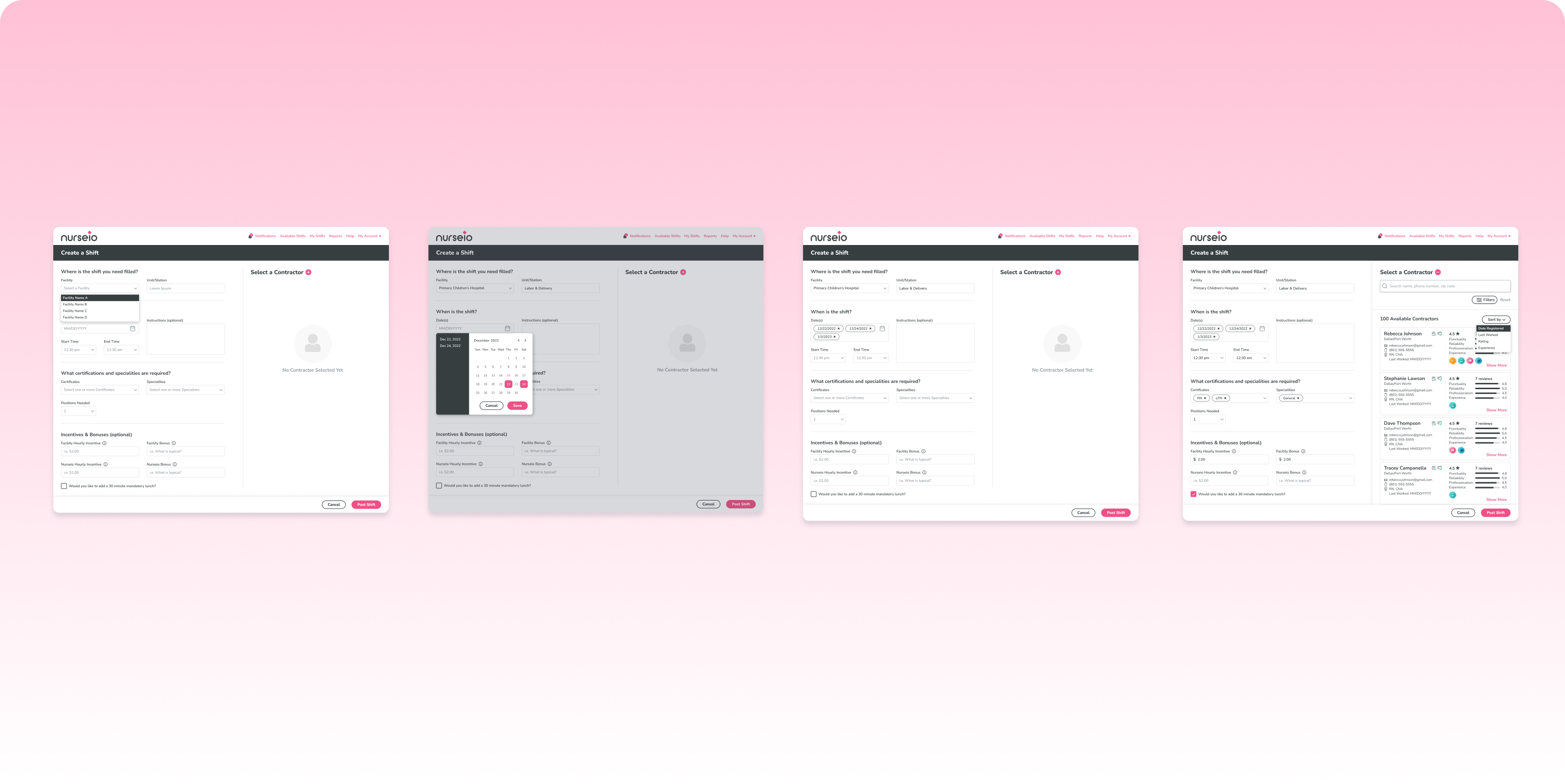
Finding a shift was only one part of the experience. Users also needed to review details, confirm availability, manage upcoming work, and stay informed about schedule changes. I designed a connected workflow that reduced unnecessary navigation and kept scheduling tasks within a single, intuitive experience.
Key Decision #3
Design for confidence, not just efficiency
Healthcare scheduling carries real consequences. Missing important information or misunderstanding an assignment can affect both clinicians and patients. Throughout the experience, I focused on creating clear information hierarchy, predictable interactions, and transparent communication so users always understood what they were committing to before accepting a shift.
Final Solution
A workforce management experience designed around flexibility
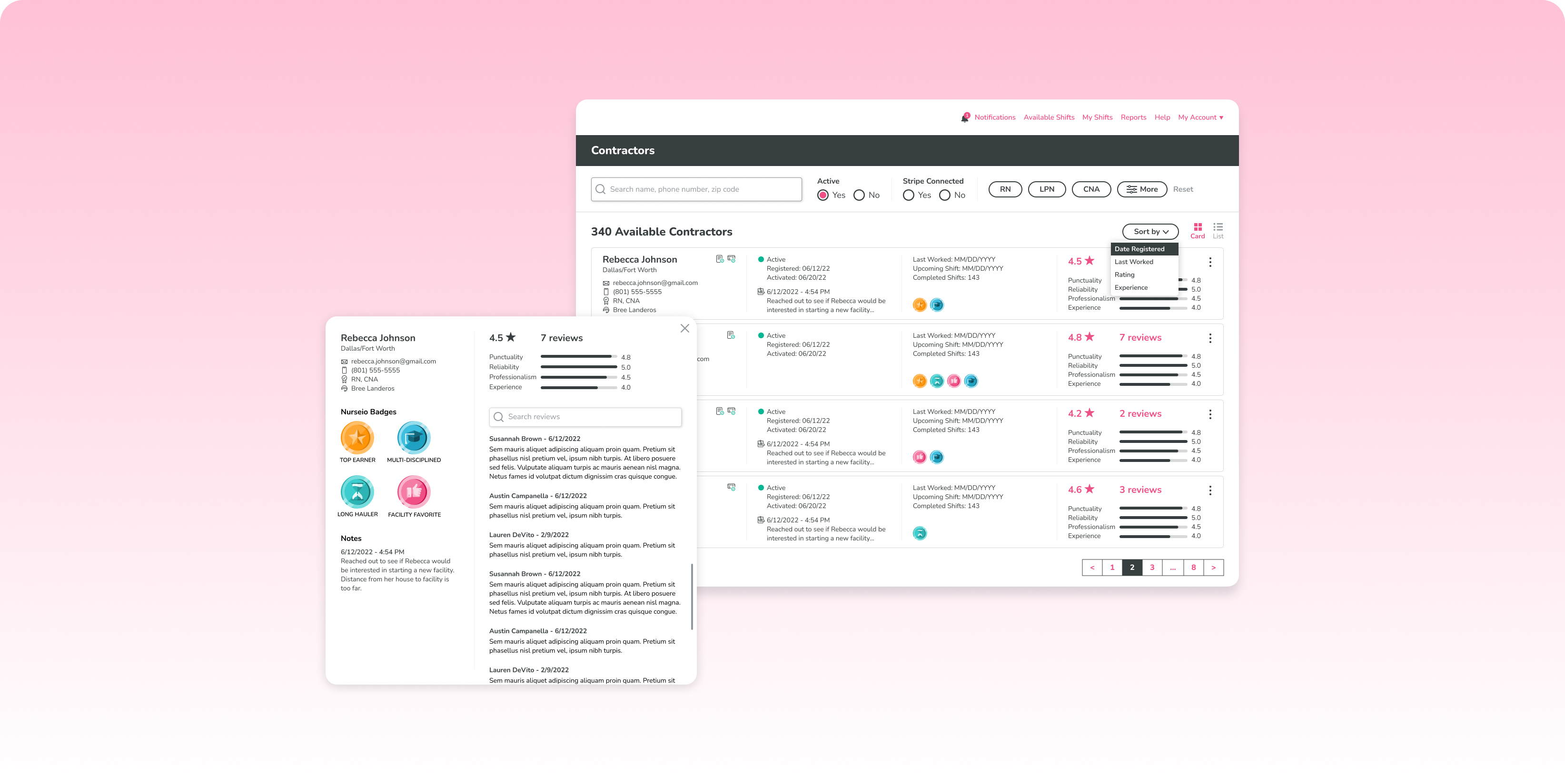
The final product helped healthcare professionals discover opportunities, evaluate assignments, manage their schedules, and stay informed throughout the staffing process. Rather than piecing together information across multiple systems, users could confidently manage flexible work from a single experience.
Shift Discovery
Important details are surfaced immediately, helping users evaluate opportunities without opening multiple screens.
Shift Details
Clinicians can review requirements, compensation, and scheduling information before accepting an assignment.
Schedule Management
Upcoming work is organized in a centralized view, making it easier to manage changing schedules.
Notifications & Updates
Clear communication keeps users informed about schedule changes and important actions throughout the workflow.
Impact
This project demonstrated how thoughtful workflow design can reduce friction in a complex scheduling process while supporting both clinician flexibility and organizational staffing needs.
By grounding the experience in user research and focusing on confidence over complexity, we created a product that better aligned with how healthcare professionals actually evaluate and manage flexible work.
Reflection
One insight from this project continues to influence my approach to product design: People don't want more choices—they want enough context to make the right choice quickly. That principle guided everything from information hierarchy to scheduling workflows and remains central to how I approach complex decision-making experiences today.