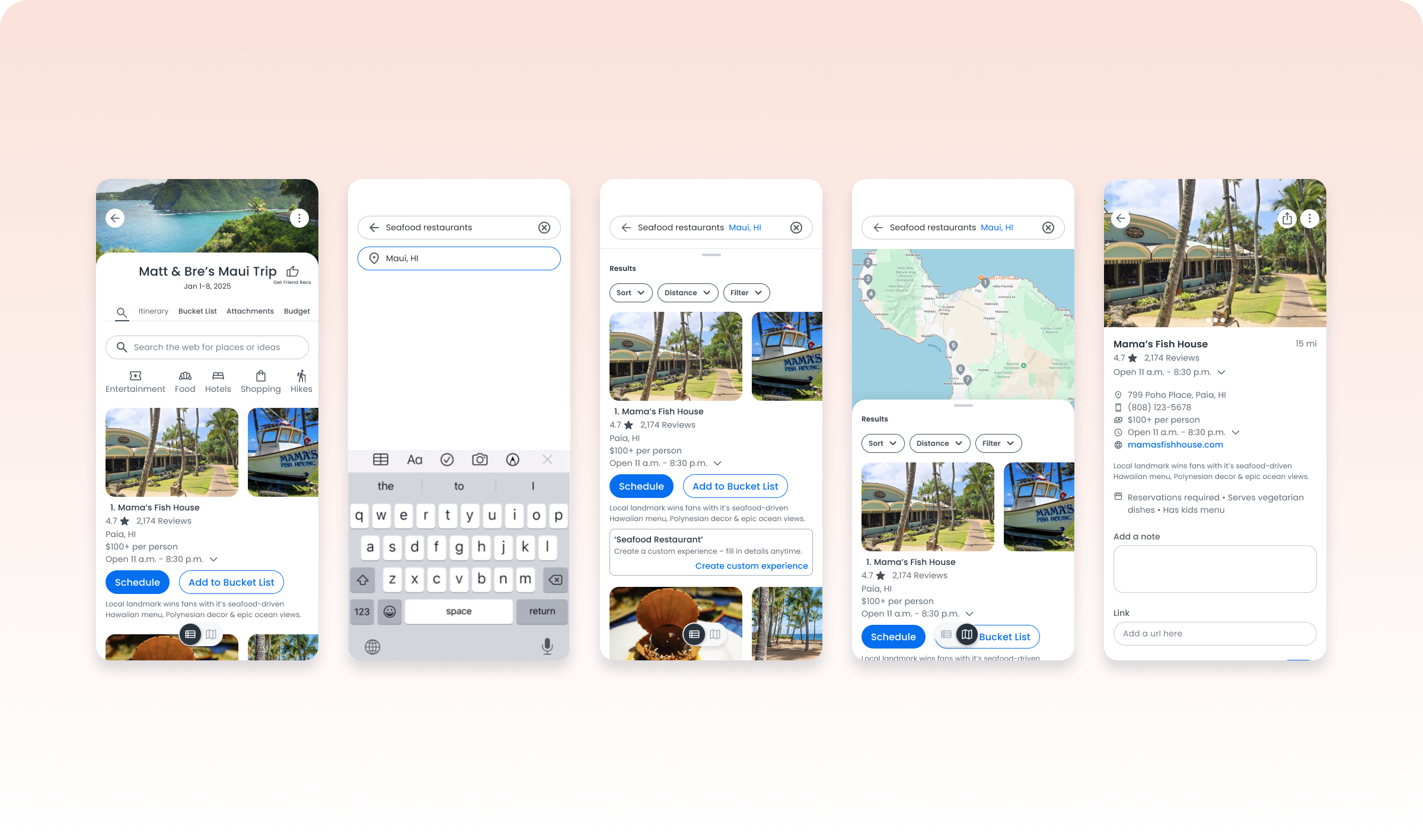
Designing a Travel Planning App from Concept to App Store Launch
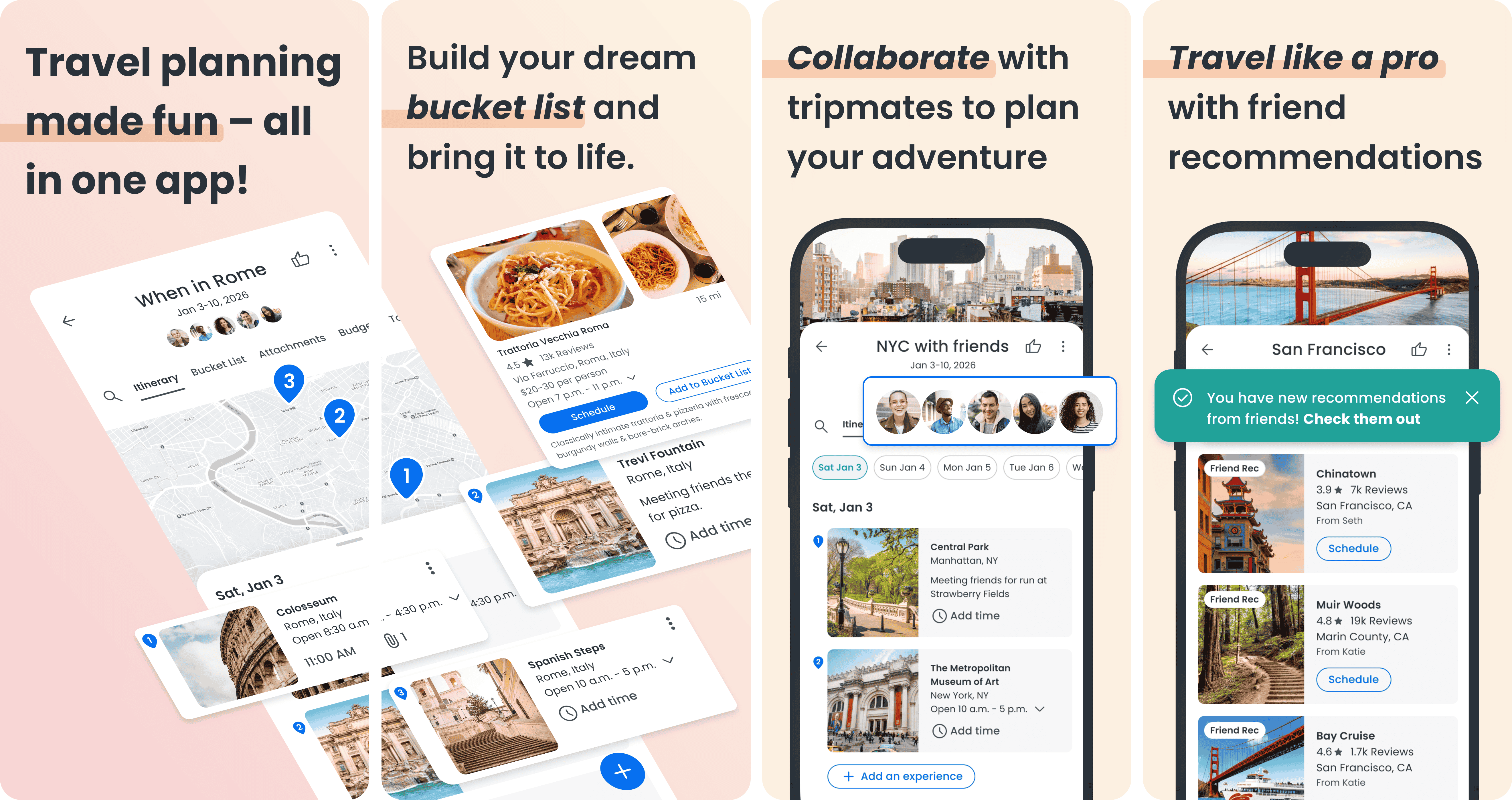
Travel planning often happens across notes, spreadsheets, group chats, and booking websites. I designed a collaborative mobile experience that brought planning, organization, and communication into one place, helping groups coordinate trips more easily from idea to itinerary.
Overview
Role
Lead Product Designer (sole designer)
Duration
Multiple product sprints
Team
Founder, Engineering Team
My Responsibilities
User research, product strategy, UX/UI design, prototyping, usability testing, developer collaboration
Outcome
Designed and launched a native mobile app on iOS and Android with a 5.0 App Store rating.
The Problem
People rarely plan trips alone. Yet most travel tools are designed for individuals. Groups end up coordinating destinations, budgets, activities, and itineraries across multiple apps, making collaboration fragmented and frustrating.
The opportunity wasn't simply to create another travel app. It was to create a shared planning experience that kept everyone aligned throughout the journey.
Understanding Travelers
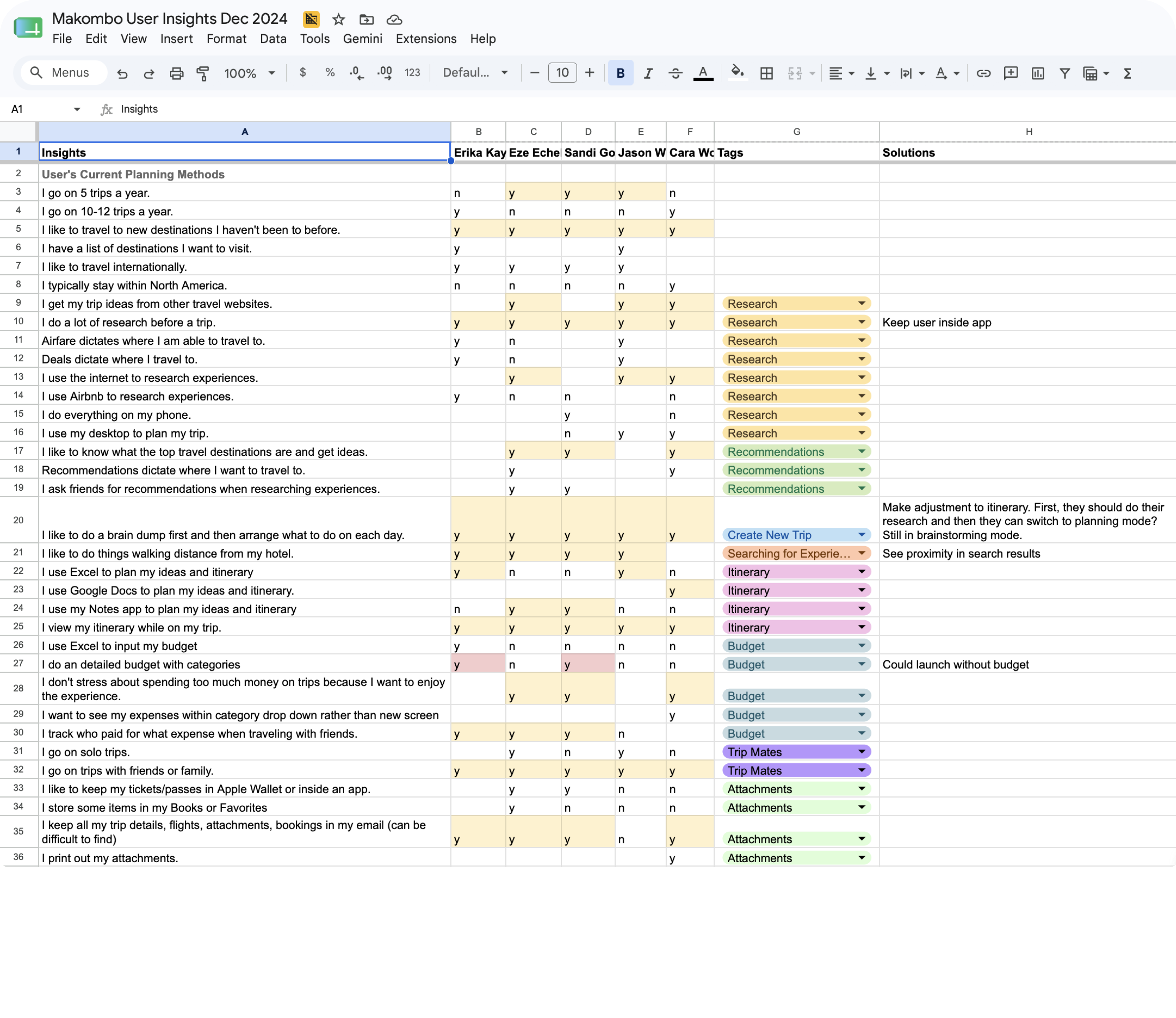
Before designing the product, I interviewed five frequent travelers to understand how they currently planned trips with friends and family. Three themes consistently emerged:
Planning happened across too many tools.
Participants bounced between messaging apps, notes, spreadsheets, and booking websites just to organize one trip.
Group coordination created the most friction.
Keeping everyone aligned on budgets, dates, and activities often required constant back-and-forth communication.
Travelers wanted flexibility.
Plans changed frequently, making static itineraries difficult to maintain.
My Role
As the sole Product Designer, I owned the experience from initial discovery through launch.
I conducted user interviews, synthesized research insights, defined the product experience, designed the interface, created interactive prototypes, and collaborated closely with engineering throughout development. The product ultimately launched on both the App Store and Google Play.
Key Decision #1
Design around collaboration, not booking
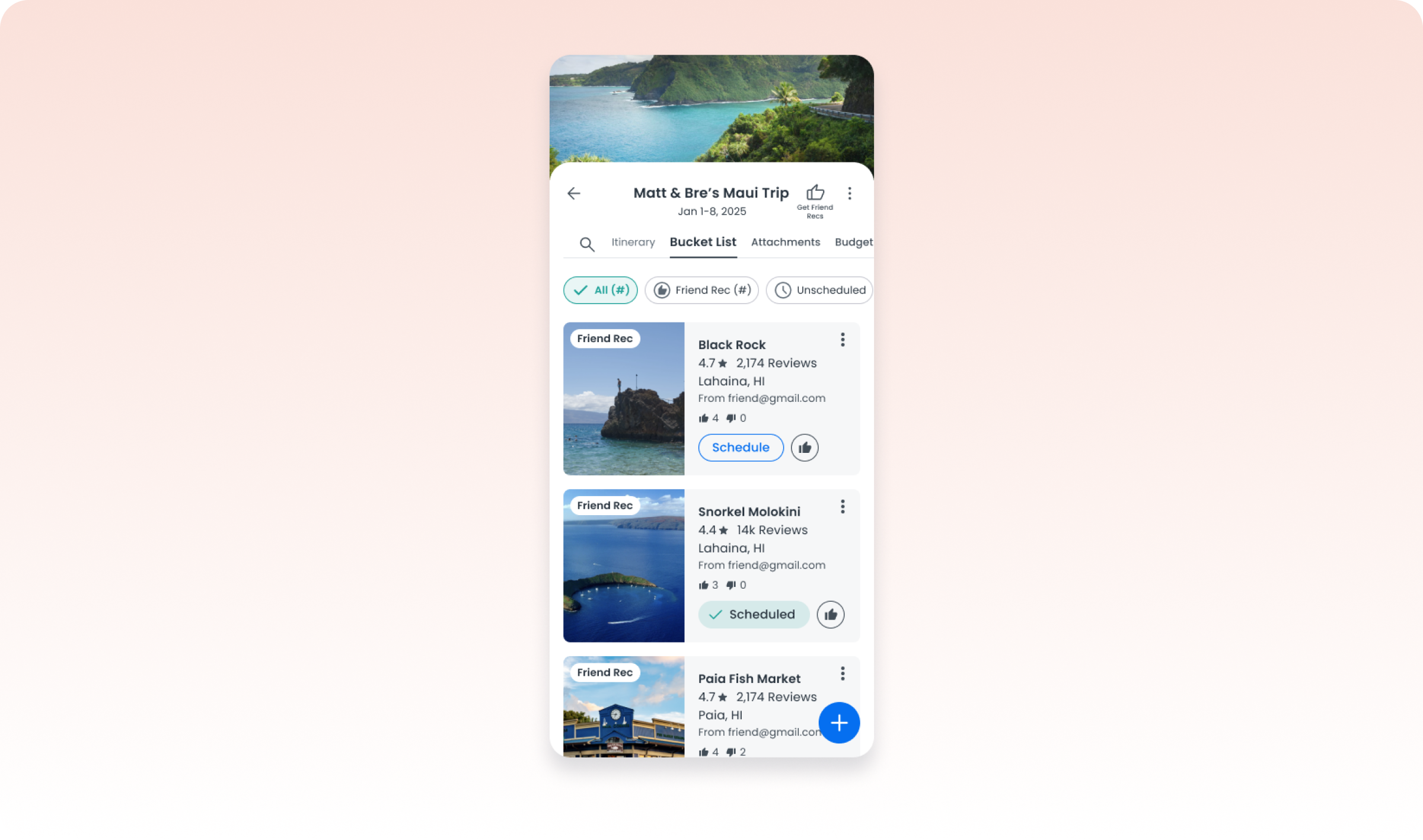
Rather than centering the experience around reservations, I focused the product on shared planning. Users could organize destinations, activities, notes, and itineraries together, creating a single source of truth for the entire group.
Key Decision #2
Keep planning flexible
Travel plans rarely stay fixed. Instead of forcing users into rigid itineraries, I designed an experience that allowed plans to evolve naturally as trips developed. This gave users confidence that the app could support both early brainstorming and finalized itineraries.
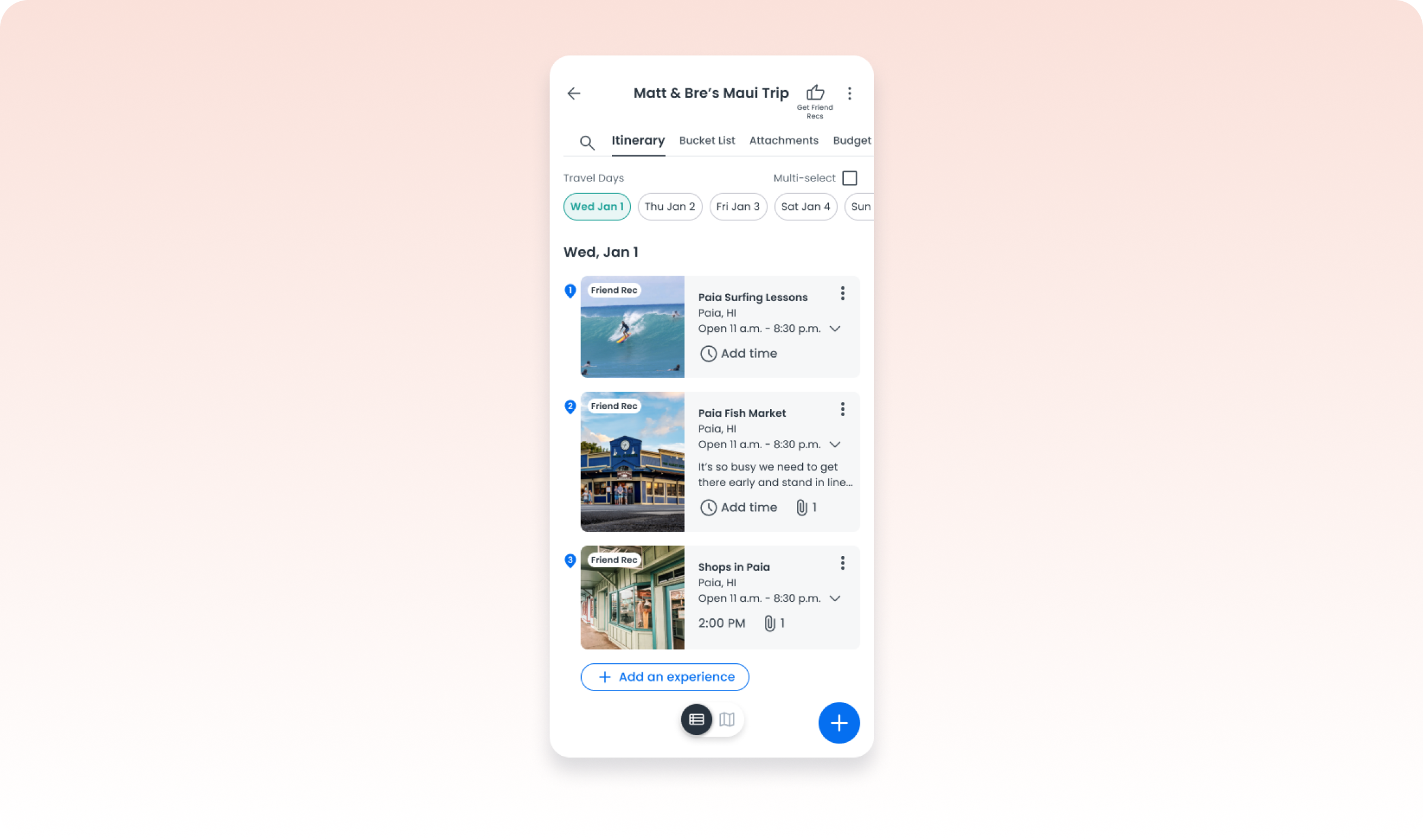
Key Decision #3
Prioritize mobile-first interactions
Travel planning often happens while users are commuting, meeting with friends, or already traveling.
I designed the experience specifically for mobile behaviors, reducing unnecessary steps and making it easy to capture ideas, update plans, and access trip information on the go.